admin1.9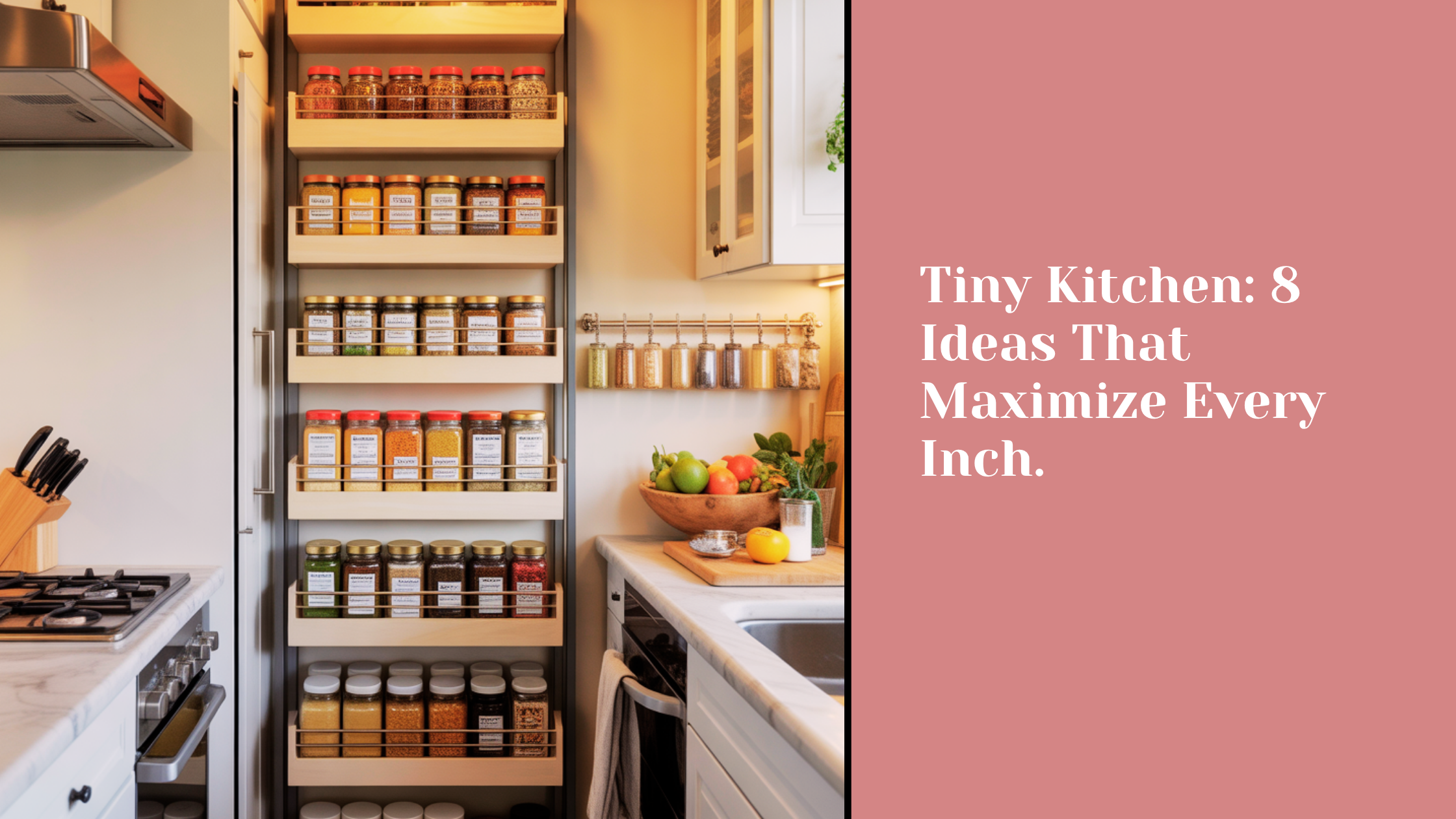
A tiny kitchen does not mean tiny potential. In fact, the smaller the kitchen, the more creative you become. Limited space forces you to think smarter about storage, layout, and everyday habits. Instead of spreading out, you learn to use every inch with purpose. Suddenly that narrow wall becomes a storage hub, the inside of a cabinet door becomes prime real estate, and the empty corner you ignored turns into your favorite prep zone.
If you have ever cooked in a small kitchen, you already know the challenge. Countertops disappear quickly. Cabinets fill up faster than you expect. Opening the fridge sometimes feels like playing a game of kitchen Tetris. Yet the truth is simple. A tiny kitchen can work beautifully when you design it with intention.
From my own personal experience, small kitchens often become the most efficient kitchens in the home. When everything sits within arm’s reach, cooking becomes faster, cleanup becomes simpler, and clutter has fewer places to hide.
Let me show you how a tiny kitchen can feel bigger, smarter, and far more enjoyable than you might expect.
What a Tiny Kitchen Really Means and Why It Works
A tiny kitchen refers to a compact cooking space that uses a smaller footprint than a traditional kitchen. You often find them in small apartments, studio homes, tiny houses, guest suites, and even vacation cabins. The size may be limited, but the function does not have to be.
The key difference between a small kitchen that feels frustrating and one that feels brilliant comes down to design. A well-planned tiny kitchen focuses on three ideas: efficiency, accessibility, and simplicity.
Efficiency means every item serves a purpose. If something rarely gets used, it probably does not deserve a permanent spot. Accessibility means the tools you use daily stay within easy reach. Simplicity keeps the room calm instead of cluttered.
A tiny kitchen often encourages better cooking habits. You clean as you go because space demands it. You organize your ingredients carefully because cabinets are limited. And you begin to appreciate tools that work hard without taking up half the room.
Instead of fighting the size of your kitchen, you start working with it.
Now let’s explore eight clever ideas that turn a tiny kitchen into a space you will truly love to use.
Vertical Storage That Turns Empty Walls Into Useful Space
One of the most common mistakes in tiny kitchens is ignoring the walls. Many kitchens leave large sections of wall completely empty while cabinets overflow below. That empty space holds huge potential.
Vertical storage solves this problem by moving items upward instead of outward. Wall-mounted shelves instantly create storage without consuming precious floor space.
Floating shelves work beautifully for everyday items such as plates, bowls, mugs, and jars. When you store frequently used items on open shelves, you eliminate the need to open cabinets constantly. Everything becomes faster to reach.
Wall rails offer another brilliant solution. A simple metal rail can hold hooks for utensils, ladles, spatulas, and even small pans. Suddenly the tools that once filled drawers now hang neatly on the wall.
Magnetic knife strips also deserve attention. Instead of storing knives in bulky blocks that occupy counter space, a magnetic strip keeps them visible and accessible. It also adds a professional kitchen feel.
Pegboards have become popular in tiny kitchens for a reason. A pegboard lets you rearrange hooks, shelves, and baskets whenever your needs change. Think of it as a flexible storage wall.
When you start using vertical space, the kitchen instantly feels larger. Counters clear up. Cabinets become less crowded. And the room begins to breathe again.
Multi-Purpose Furniture That Works Twice As Hard
In a tiny kitchen, every piece of furniture should earn its place. If something performs only one function, it better be extremely important.
Multi-purpose furniture solves this problem by combining tasks into one smart design.
A kitchen island with storage becomes a prep area, dining table, and storage unit all at once. Even a narrow rolling island can transform a tight kitchen. You gain extra counter space while keeping mobility.
Fold-down tables work beautifully in compact kitchens. When folded up, the table stays flat against the wall. When you need extra prep space or a quick dining area, it opens instantly.
Rolling carts also deserve praise. A small cart can hold spices, cooking oils, utensils, and cutting boards. When cooking, you roll it next to the stove. When finished, it slides neatly into a corner.
Another clever option involves benches with hidden storage. If your kitchen includes a small dining nook, choose seating that hides storage under the seat. You can store table linens, small appliances, or pantry items without using cabinet space.
When furniture serves more than one role, your kitchen feels twice as functional without growing any larger.
Clever Cabinet Organization That Makes Space Appear
Cabinets in a tiny kitchen often hold far more than they should. Pots stack awkwardly. Lids disappear. Containers multiply when you are not looking.
Smart cabinet organization fixes these daily frustrations.
Pull-out shelves make deep cabinets easier to use. Instead of digging blindly into the back corner, the shelf slides forward so you can see everything.
Tiered organizers help maximize vertical space inside cabinets. These small steps allow you to stack plates, jars, and cans without losing visibility.
Lid organizers solve a surprisingly annoying problem. Pot lids often slide around inside cabinets like clumsy dinner guests. A simple rack keeps them upright and easy to grab.
Cabinet door organizers add another layer of hidden storage. The inside of a cabinet door can hold spice racks, foil dispensers, cutting boards, or cleaning supplies.
Drawer dividers also make a huge difference. Without dividers, utensils form a chaotic pile. With them, each item has a defined home.
Organization does not create more square footage, but it creates the feeling of more space. When every tool has a place, the kitchen becomes easier to use.
Open Shelving That Adds Air and Personality
Traditional upper cabinets sometimes make a tiny kitchen feel boxed in. Heavy cabinetry can visually shrink the room.
Open shelving offers a refreshing alternative.
When you remove bulky cabinets and replace them with simple shelves, the kitchen instantly feels lighter. Light flows more easily through the room. Walls appear taller.
Open shelves also encourage you to keep only the items you truly use. If something sits unused for months, it becomes obvious.
You can also use open shelves to add personality. Display colorful dishes, glass jars filled with ingredients, or small plants that thrive in kitchen light.
Even everyday items such as wooden spoons or ceramic bowls become decorative when arranged thoughtfully.
Of course, open shelving works best when you maintain basic organization. A shelf packed with random clutter defeats the purpose. Keep it simple and intentional.
The result feels welcoming rather than crowded.
Smart Appliances Designed for Small Spaces
Large appliances often dominate tiny kitchens. A full-size microwave, bulky toaster oven, and oversized coffee machine can consume valuable counter space.
The good news is that many modern appliances now focus on compact design.
Slim refrigerators offer excellent capacity without overwhelming the room. Some models include tall compartments instead of wide ones, which saves floor space.
Combination appliances also help. For example, an air fryer toaster oven can replace several individual machines.
Induction cooktops with two burners work surprisingly well in small kitchens. They heat quickly, save energy, and require less surface area than traditional ranges.
Under-cabinet microwaves free up counter space while staying easy to reach. Built-in appliances often create a cleaner look in compact kitchens.
Another clever option involves collapsible tools. Collapsible colanders, measuring cups, and mixing bowls flatten when not in use.
Choosing the right appliances prevents your counters from turning into a crowded showroom.
Lighting That Makes the Kitchen Feel Bigger
Lighting changes how a space feels more than many realize. Poor lighting makes a tiny kitchen feel cramped and gloomy.
Good lighting opens the room visually.
Under-cabinet lighting brightens countertops where you prepare food. Even small LED strips can transform the atmosphere.
Pendant lights over a small island or dining nook create a focal point that draws attention upward. When the eye moves upward, the room feels taller.
Reflective surfaces also help spread light. Glass cabinet doors, glossy backsplashes, and stainless steel appliances bounce light around the room.
Natural light remains the most valuable feature of all. If your kitchen includes a window, avoid blocking it with heavy curtains or tall shelves.
Bright kitchens feel larger and more inviting. They also make cooking far more enjoyable.
Creative Pantry Solutions for Tight Spaces
Pantry storage often disappears quickly in a tiny kitchen. Yet creative solutions can provide surprising capacity.
Tall narrow pantry cabinets fit into slim spaces that standard cabinets cannot use. Even a gap between appliances can become valuable storage.
Pull-out pantry racks work like sliding shelves filled with ingredients. You simply pull the rack forward and see everything instantly.
Over-the-door organizers can hold spices, packets, and small containers. Many kitchens ignore the back of doors, but that area holds plenty of storage potential.
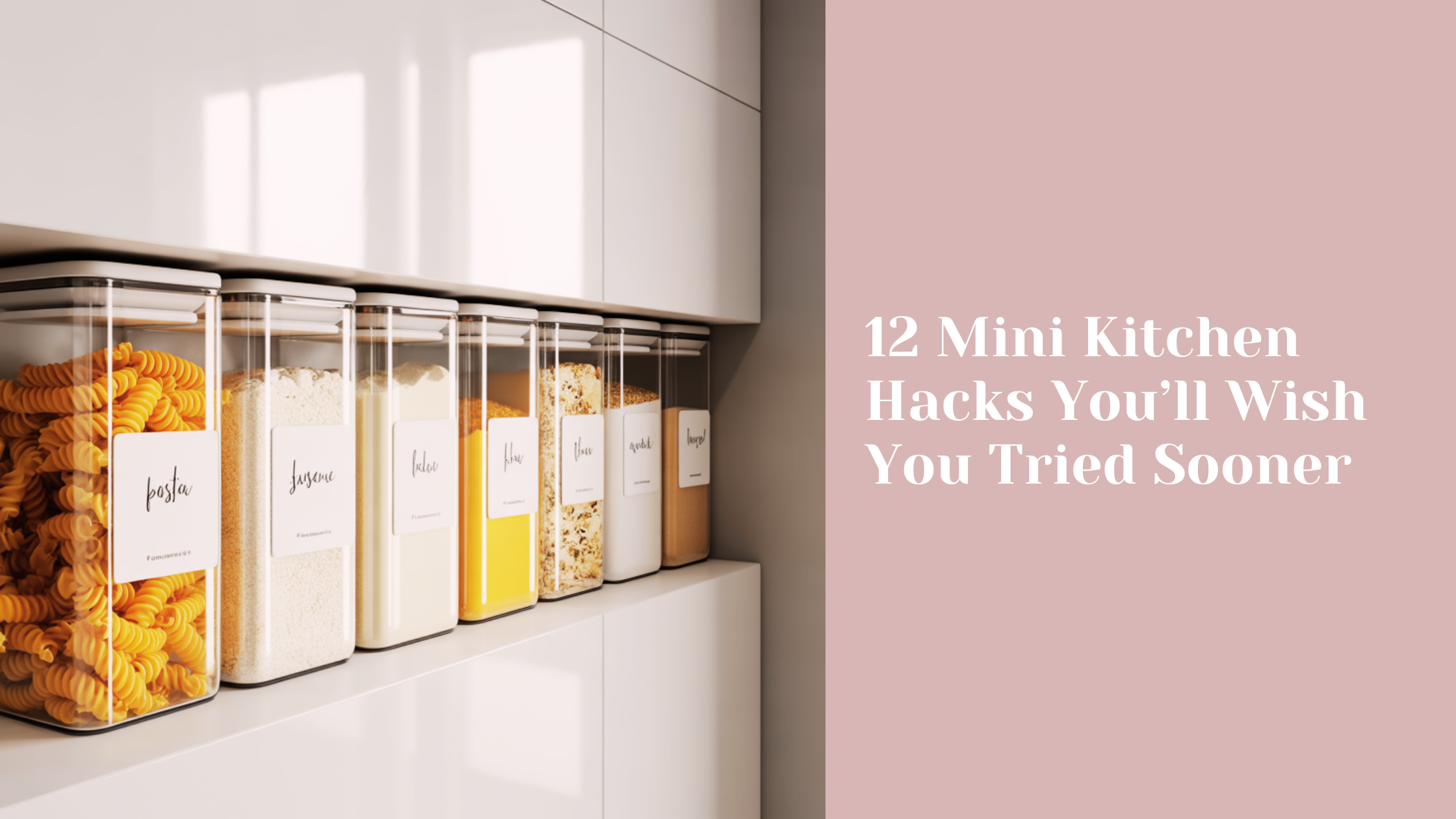
Glass jars also play an important role. When you transfer dry ingredients such as pasta, rice, or flour into clear containers, you see exactly what you have. This prevents buying duplicates and wasting space.
Labeling jars keeps everything easy to find. It also adds a satisfying sense of order to your pantry.
A well-organized pantry removes one of the biggest frustrations in tiny kitchens.
Minimalism That Keeps the Kitchen Calm
The final idea might be the most powerful. Sometimes the best way to improve a tiny kitchen is simply to own less.
Kitchen gadgets accumulate easily. You buy a tool for one recipe, then forget it exists until the next cabinet cleanup.
Minimalism encourages you to keep tools that serve multiple purposes. A high-quality chef’s knife replaces several specialized cutters. A cast iron skillet works for frying, baking, and roasting.
When you reduce unnecessary items, the kitchen becomes easier to manage. Cabinets stay organized. Counters remain clear.
Minimalism also improves cooking focus. Instead of searching through drawers for the right gadget, you know exactly where everything lives.
Many professional chefs work in surprisingly simple kitchens. They rely on skill rather than endless equipment.
A tiny kitchen benefits greatly from that same philosophy.
Why Tiny Kitchens Often Become the Most Loved Spaces
At first glance, a tiny kitchen might feel limiting. Yet many homeowners eventually discover something unexpected.
Small kitchens encourage efficiency. You move less between tasks. Ingredients stay close. Tools remain within reach.
Cleanup also becomes faster. A smaller space means fewer surfaces to maintain.
Perhaps most importantly, tiny kitchens often feel cozy and welcoming. Cooking becomes a focused activity rather than a chaotic event spread across a giant room.
Guests often gather closer in a small kitchen. Conversations happen naturally while food cooks. The space feels warm and personal.
Large kitchens can impress visually, but tiny kitchens often win when it comes to everyday comfort.
Final Thoughts
A tiny kitchen proves that size does not define functionality. Thoughtful design, creative storage, and smart habits transform even the smallest cooking space into something impressive.
Vertical storage uses walls that once sat empty. Multi-purpose furniture doubles the value of every piece. Organized cabinets eliminate clutter. Open shelving adds breathing room. Compact appliances keep counters clear. Smart lighting brightens the entire space. Creative pantry solutions expand storage. Minimalism keeps everything calm.
Each of these ideas works together to maximize every inch.
Once you start applying these changes, a tiny kitchen begins to feel intentional rather than restrictive. Cooking becomes smoother, cleanup becomes easier, and the space starts to reflect how you truly live.
And if you ever feel frustrated by the limited square footage, remember this simple truth. A tiny kitchen may be small, but the creativity it inspires is anything but small.