admin1.9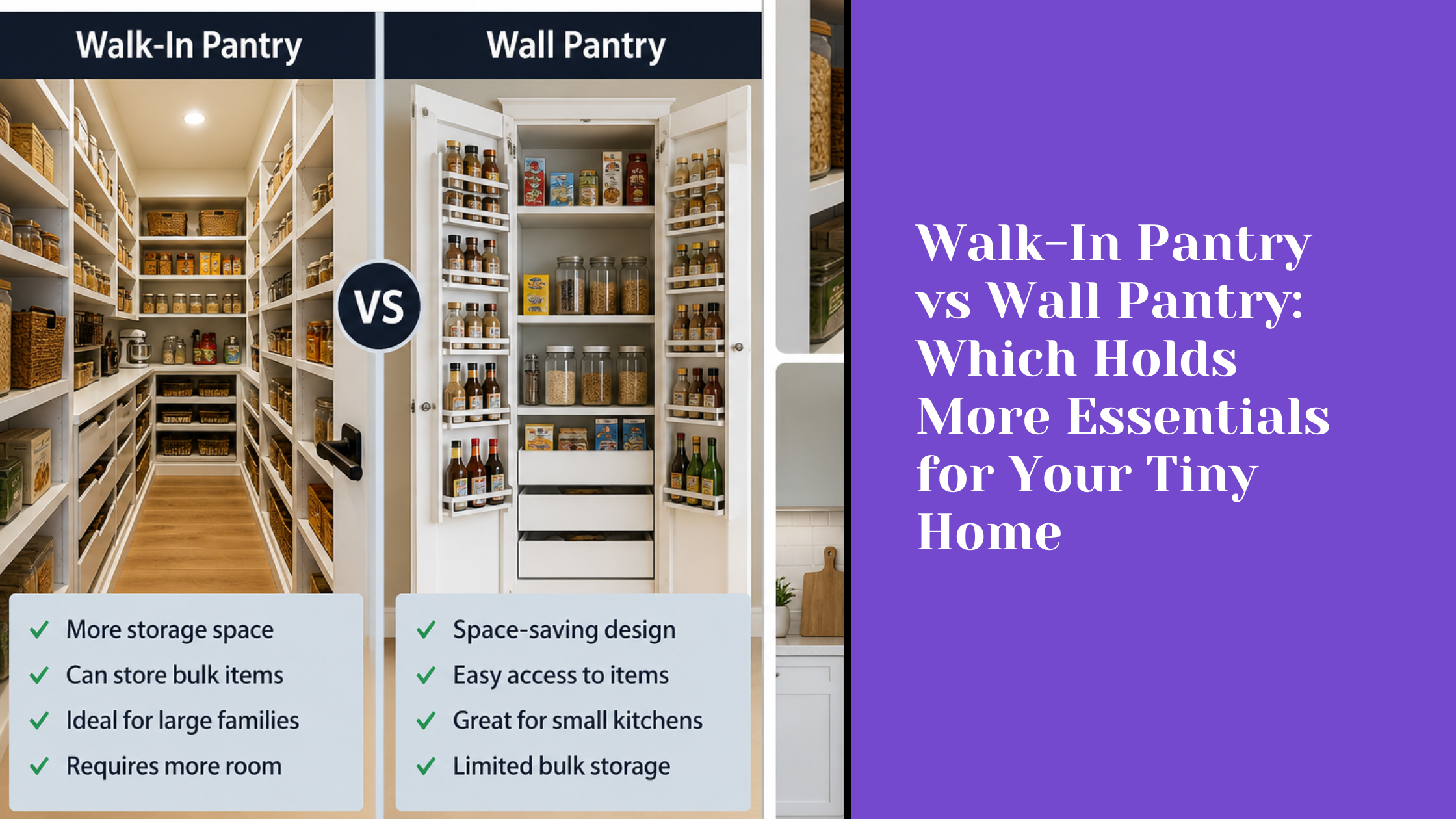
If you’ve ever lived in a tiny home, or even just dreamed about one, you know that every inch of space matters. There’s no room for clutter, no corners for forgotten boxes of snacks, and certainly no space for a pantry that’s more decorative than practical. But when it comes to storing your essentials, there’s one debate that sparks more discussion than most: walk-in pantry versus wall pantry. Which one holds more, which one saves time, and most importantly, which one makes your life easier while keeping your tiny home functional and stylish? Let’s dive in, and I promise to keep it entertaining along the way.
Imagine this: you’re standing in your tiny kitchen, a cup of coffee in one hand, and a recipe in the other. You’re ready to whip up a gourmet meal, or at least something edible, but your pantry situation makes you pause. You’ve got two options: a walk-in pantry that feels like a mini room devoted to your groceries or a wall pantry that clings to the kitchen wall like a loyal sidekick. Both have their perks, and both have their quirks. From my own personal experience, the decision isn’t always about size, it’s about lifestyle, organization, and sometimes, pure imagination.
What is a Walk-In Pantry?
A walk-in pantry is basically a tiny room designed solely for storage. Think of it as a luxury suite for your food. You can have shelves reaching the ceiling, baskets for produce, jars for grains, and even a little nook for your secret snack stash that no one else knows about. Walk-in pantries are fantastic for those who like to stock up on essentials, who cook frequently, or who just love the idea of having a personal storage paradise.
One of the biggest advantages of a walk-in pantry is the sheer volume it can hold. In a tiny home, where space is at a premium, having a dedicated room for food may sound like overkill, but it’s actually a game-changer. You can organize items by type, frequency of use, or even color if you’re feeling particularly aesthetic that day. And yes, you might even get a little lost in there sometimes, though that’s just part of the charm.
The Wall Pantry: Compact and Clever
Now, if the idea of allocating an entire room to food seems a bit much, a wall pantry might be the way to go. Wall pantries are vertical storage units mounted on the kitchen wall. They make excellent use of vertical space, often featuring sliding doors, pull-out shelves, or clever compartments for spices, cans, and snacks.
The beauty of a wall pantry is its efficiency. Everything is visible, everything is reachable, and you don’t have to worry about bumping into shelves as you navigate a tiny space. It’s like a magic cabinet that holds a lot more than it looks like it could. Based on my overall experience, a well-organized wall pantry can sometimes outperform a poorly organized walk-in pantry in terms of accessibility and daily convenience.
Space Considerations: Which One Fits Your Tiny Home?
Tiny homes are, by definition, small. Space is limited, so every square foot counts. A walk-in pantry requires a larger footprint, which might mean sacrificing some living space elsewhere. However, it allows you to store bulk items and keep your kitchen clutter-free. If you can dedicate even a small room or corner to a walk-in pantry, it becomes a storage oasis.
A wall pantry, on the other hand, hugs your existing walls and maximizes vertical storage. This is ideal if you’re dealing with a kitchen where floor space is sacred. It also keeps your essentials at eye level, which is convenient for quick meal prep. From my own personal experience, wall pantries can be a lifesaver in tiny kitchens because they provide ample storage without eating into your precious living area.
Organization: The Real Game-Changer
Let’s be honest—pantry space is only as good as your organization skills. You could have the largest walk-in pantry in the world, but if it’s a chaotic mess of cans, jars, and bags of chips, you might as well not have it at all.
Walk-in pantries allow for extensive organizational setups. You can have labeled baskets for snacks, clear containers for grains, and even separate shelves for different types of cooking essentials. The more effort you put into organizing, the more efficient your pantry becomes.
Wall pantries, though smaller, encourage you to prioritize organization out of necessity. Pull-out shelves and adjustable compartments mean that everything has a designated spot, and there’s less room for clutter to hide. In many ways, the wall pantry can teach you the art of minimalism and careful planning, which is exactly what you need in a tiny home.
Accessibility and Convenience
Nothing is more frustrating than having to dig through a mountain of canned goods to find that one elusive can of tomato paste. Accessibility is where wall pantries shine. Most are designed with pull-out or sliding mechanisms, making it easy to reach everything without bending, stretching, or performing some kind of acrobatic feat.
Walk-in pantries, by contrast, are more like treasure hunts. If you know your system, it’s fantastic. If you don’t, it can be overwhelming. The benefit is that you can store large items like bulk flour bags, big boxes of cereal, or oversized kitchen appliances without worrying about cramped shelves.
Style and Aesthetics
Tiny homes often rely on clever design to feel spacious. A walk-in pantry can be designed to blend seamlessly with the home’s overall aesthetic or to serve as a standout feature. Picture a sleek sliding barn door leading to a pantry that’s meticulously organized, shelves lined with glass jars, wooden baskets, and maybe even a quirky chalkboard listing the week’s meal plan. It’s functional, but it also adds character.
Wall pantries, meanwhile, can be sleek, minimal, or hidden entirely behind cabinet doors. They don’t take up visual space, which is crucial in small homes where every wall counts. Depending on your style preference, a wall pantry can either blend into the background or become a bold organizational statement.
Cost Considerations
Walk-in pantries tend to be more expensive, mostly because they require more construction, more shelving, and sometimes even additional lighting. You’re essentially building a mini-room, which can be a significant investment, especially in tiny homes where budgets are often tight.
Wall pantries are more budget-friendly and can often be added to an existing kitchen with minimal construction. They’re a clever solution for storage without a hefty price tag. From my own personal experience, a well-planned wall pantry can provide a lot of bang for your buck, especially when every inch of space is at a premium.
Fun Ideas and Creative Uses
Here’s where things get interesting. Walk-in pantries aren’t just for food. You can stash small appliances, extra cleaning supplies, or even a little corner for a coffee station. It’s like a tiny home’s version of Narnia—except it’s full of snacks and spices.
Wall pantries can be equally versatile. Pull-out spice racks, hidden wine shelves, and even compartments for kitchen gadgets make them surprisingly functional. You can customize every inch to suit your lifestyle, turning a compact wall pantry into a powerhouse of efficiency.
Real-Life Scenarios
Let’s imagine a week in your tiny home:
Scenario one: You have a walk-in pantry. You stock up on essentials, host a small dinner, and never have to worry about running out of ingredients. You can see everything at a glance, grab what you need, and even hide the snacks your kids shouldn’t find.
Scenario two: You have a wall pantry. You’re making dinner for one or two people. You can quickly reach every ingredient, rotate items easily, and avoid the clutter that often comes with bulk storage. It’s efficient, compact, and surprisingly satisfying when everything fits perfectly.
In both cases, your pantry is a hero—but the hero’s powers depend on your home layout, cooking habits, and personal preferences.
Which One Holds More Essentials?
If your goal is pure capacity, a walk-in pantry generally holds more. You can stack items high, store bulk goods, and organize multiple levels of shelves without worrying about space constraints. For tiny home owners who love to buy in bulk or cook frequently, a walk-in pantry can be a dream come true.
However, if your goal is daily convenience, quick access, and smart use of limited space, a wall pantry might actually “hold” more in terms of functional accessibility. You might not have endless storage, but what you do have is easy to reach, organized, and ready to use.
Final Thoughts
Deciding between a walk-in pantry and a wall pantry comes down to lifestyle, space, and personal preference. A walk-in pantry is a luxury that offers ample storage and the joy of organizing a mini room full of essentials. A wall pantry is clever, compact, and surprisingly powerful for tiny home kitchens where every inch matters.
From my own personal experience, the best choice isn’t necessarily the one that holds the most. It’s the one that fits your space, matches your cooking habits, and makes your life easier every day. Whether you go big with a walk-in pantry or keep it compact with a wall pantry, one thing is certain: a well-planned pantry transforms your tiny home from cramped to functional, and from ordinary to something you’ll truly love to explore.
At the end of the day, storage is about more than just putting things away. It’s about creating a space that works for you, makes cooking enjoyable, and keeps your tiny home feeling open and uncluttered. So, take a good look at your kitchen, imagine the possibilities, and choose the pantry that will help you live, and cook, your best tiny home life.